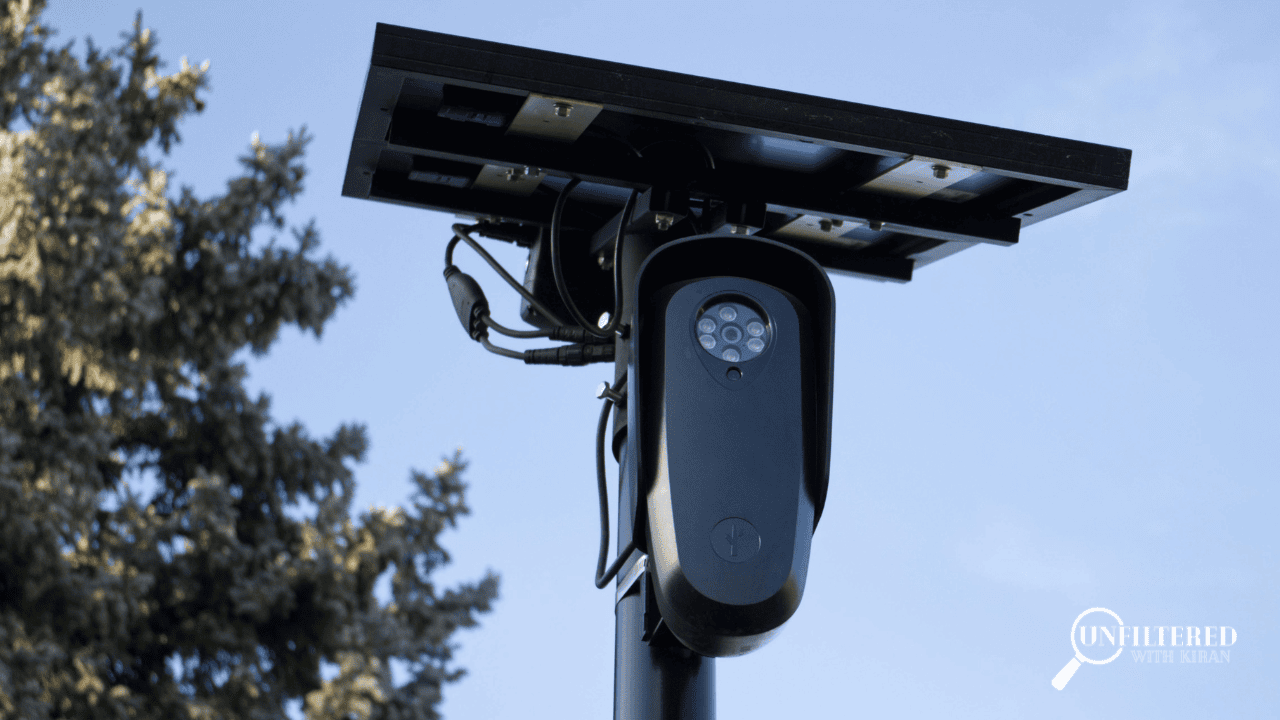
LIVINGSTON — The Livingston Parish Council determined Thursday that its proposed ordinance limiting the use of Flock cameras and other similar devices was not quite ready for prime time after a discussion that touched on privacy, personal property rights and concern for the future.
The council sent the ordinance back to the Ordinance Committee for further vetting.
The widely-used surveillance cameras, which include license plate readers that store data about vehicles that pass by them, have become flashpoints nationwide as media coverage has exposed abuse of the systems by law enforcement and others.
Discussions about limiting or banning the cameras have arisen in dozens, if not hundreds, of municipalities across the country.
Councilman Ryan Chavers proposed the ordinance, which would have barred the cameras on parish rights of way. It was not retroactive and did not affect cameras on private property.
Chavers said concerns about the rapid escalation of these kinds of surveillance devices led him to porpose the ordinance. Many homeowner’s associations have installed the systems.
“My biggest concern was not just in subdivisions, but outside of subdivisions,” Chavers said. “So, if you live on a parish road, who’s to say that a complete stranger can’t put a camera in the parish right of way and monitor your house, your kid’s house, your sister’s house. To me, it’s just a huge invasion of privacy.”
Garry Talbert, the only person who spoke to the council during a public hearing on the ordinance, said that invasion is already underway.
“You can’t go into a public place, ride down a public street and expect privacy,” he said. “When you’re on your cell phone, you’re being tracked. Big Brother’s already there.”
Several council members wondered how, if the ordinance was not retroactive, officials could determine whether a camera was put in place before or after the ordinance and wondered if the responsibility would fall on Sheriff Jason Ard to monitor camera placement.
Ard has said that his office doesn’t do business with Flock.
Chavers told the council that he had spoken to Ard, who does not want to have to manage privately-owned surveillance cameras.
“He does not want that responbility,” Chavers said. “He’s got his own surveillance system. He monitors the data and he’s got cameras all over.”
Councilman Ricky Goff said he’s not sure how it could work without the sheriff’s involvement.
“As you can see, there’s a lot of pieces to this thing that still needs to be really worked out,” Goff said.
Councilwoman Erin Sandefur said she was concerned about whether the parish could be held liable if somone misused those cameras to track or stalk people.
“There are unfortunately some pretty sick people that misuse these cameras,” she said. “So what happens if we have a case of that, and the parish is on the hook, for somebody’s private camera because somebody’s child, wife, whatever, was harmed by some sex deviant criminal?”
Beyond liability, she said, is the question of personal privacy.
“I like my privacy. If you want to put a camera on your private land, go for it. But I don’t want a camera in a median. You know, facial recognition is a thing,” she said, explaining that she recently attended a conference that examined how artificial intelligence and surveillance work.
“I’m a little fearful. I’m a lot fearful of what I heard. Hacking occurs in this, deviant and criminal behaviors. Private cameras are not law enforcement cameras. Those are different cameras. Where do we draw the line with privacy?”
Councilman Dean Coates said he was also concerned about how the cameras diminish privacy.
“I know in these times that we have today, a lot of people just hit the button and give their privacies away, and that’s one thing,” he said. “If you want to do that with your phone or other other devices that you have, but if I’m going to visit someone in a neighborhood, I shouldn’t have to be concerned with, I don’t know that that camera’s there. Even if everyone in that neighborhood has given permission for the camera to be there, it could still be an issue.”
Councilman John Wascom said the proposal needs more work to balance privacy considerations with the mechanics of enforcing such an ordinance. He proposed sending it back to the ordinance committee.
The council approved the motion on a 6-3 vote.
Download the Unfiltered with Kiran app from the Apple App Store and Google Play to stay updated on the latest news across the Capital area.
Support UWK and its mission to deliver The News You Deserve. Unfiltered. Become a monthly patron on Patreon today!